Skip to content

Blog

Mastering Klipper: Updating Deprecated Firmware on MCU and EBB

If you updated Klipper in Mainsail or Fluidd and suddenly see a warning about deprecated code on your MCU and EBB board, this guide is for you.

The short version: updating Klipper on the host does not automatically update firmware on your physical boards. You need to recompile and flash both your toolhead board and your mainboard so protocol versions stay in sync.

  • Host: BTT CB1 or Raspberry Pi
  • Mainboard: BTT Manta M8P V1.1
  • Toolhead board: EBB2209 CAN
  • CAN bootloader: Katapult (formerly CanBoot)

Klipper has two parts:

  • Host software running on Linux
  • Firmware running on each microcontroller board

When the host updates but board firmware stays old, Klipper reports protocol mismatch/deprecated code until everything is aligned.

  1. SSH into your host.
  2. Back up your current config files.
  3. Keep your current board UUIDs handy from printer.cfg.
  4. Have physical access to the toolhead board in case you need a reset.
Terminal window
cd ~/klipper
make menuconfig
make clean
make

In menuconfig, choose options that match your exact EBB model and bootloader settings.

Terminal window
sudo service klipper stop

Use your EBB UUID from printer.cfg. If needed, discover devices with canbus_query first.

Terminal window
python3 ~/klipper/scripts/canbus_query.py can0
python3 ~/katapult/scripts/flashtool.py -i can0 -u <your-ebb-uuid> -f ~/klipper/out/klipper.bin

If the board is not detected or flash fails, do a double-tap reset on the EBB to force bootloader mode, then rerun the flash command.

Phase 2: Update the Mainboard (BTT Manta M8P)

Section titled “Phase 2: Update the Mainboard (BTT Manta M8P)”

If your Manta is acting as a USB-to-CAN bridge, your menuconfig settings matter a lot. Wrong settings can break CAN communication.

Use this reference profile for M8P V1.1:

SettingSelection
Micro-controllerSTMicroelectronics STM32
Processor modelSTM32G0B1
Bootloader offset8KiB bootloader
Clock Reference8 MHz crystal
Communication interfaceUSB to CAN bus bridge (USB on PA11/PA12)
CAN bus interfaceCAN bus (on PD12/PD13)

Then compile and flash with your normal M8P method (SD card, DFU, or your existing maintenance workflow), and confirm the new firmware boots cleanly.

Start Klipper again:

Terminal window
sudo service klipper start

Then refresh Mainsail/Fluidd and confirm:

  • Deprecated code warnings are gone
  • MCU and CAN stats populate normally
  • No recurring protocol shutdown errors

If errors remain, verify USB/CAN visibility from the host:

Terminal window
lsusb

If you repeatedly see protocol shutdowns or flash instability even after clean reflashes and reset attempts, hardware failure is possible (especially from heat/stress over time).

Potential replacement paths:

If this walkthrough helped, save it in your printer maintenance notes so the next Klipper update cycle takes minutes instead of hours.

Making 3D Prints Look Professional | OrcaSlicer 2.3.2 Final

Hey, this is Mike from Minimal 3DP, and today we are wrapping up our OrcaSlicer 2.3.2 series. The release candidate phase is officially over, and the stable 2.3.2 release is finally here.

In this fourth and final part of our series, we are moving away from structural engineering and focusing entirely on aesthetics. If you want your 3D prints to look like professionally manufactured, injection-molded parts, this is the update you’ve been waiting for. We are going to look at Fixed Angle Ironing, Structured Fuzzy Skin, and a seam alignment feature I completely missed for years. Let’s go ahead and get started.


The Hardware Bridge: Consistent Extrusion for Textures

Section titled “The Hardware Bridge: Consistent Extrusion for Textures”

Software textures and ironing only look good if your physical extrusion is perfectly consistent. If your hotend is pulsing or your extruder gears are skipping, no amount of slicer tuning will save your top surfaces. I’m testing these aesthetic upgrades on my K2 Plus ecosystem to ensure we have a rock-solid baseline.

Transparency Note: Some of the links in this post are affiliate links. If you go through them to make a purchase, I will earn a small commission (which helps support M3DP!). You will not pay a penny more.


1. Fixed Angle Ironing (Fixing Tiger Stripes)

Section titled “1. Fixed Angle Ironing (Fixing Tiger Stripes)”

Standard ironing algorithms dynamically change the ironing direction based on the longest dimension of the top layer. While this saves time, it creates “tiger striping”—where light reflects differently off varying sections of the flat top surface, making it look patchy and distinctly 3D printed.

The 2.3.2 Fix: OrcaSlicer 2.3.2 introduces a Fixed Ironing Angle setting. By forcing the nozzle to iron in the exact same vector (e.g., 45 degrees) across the entire top surface, the plastic grain aligns perfectly. The result is a smooth, uniform reflection of light.

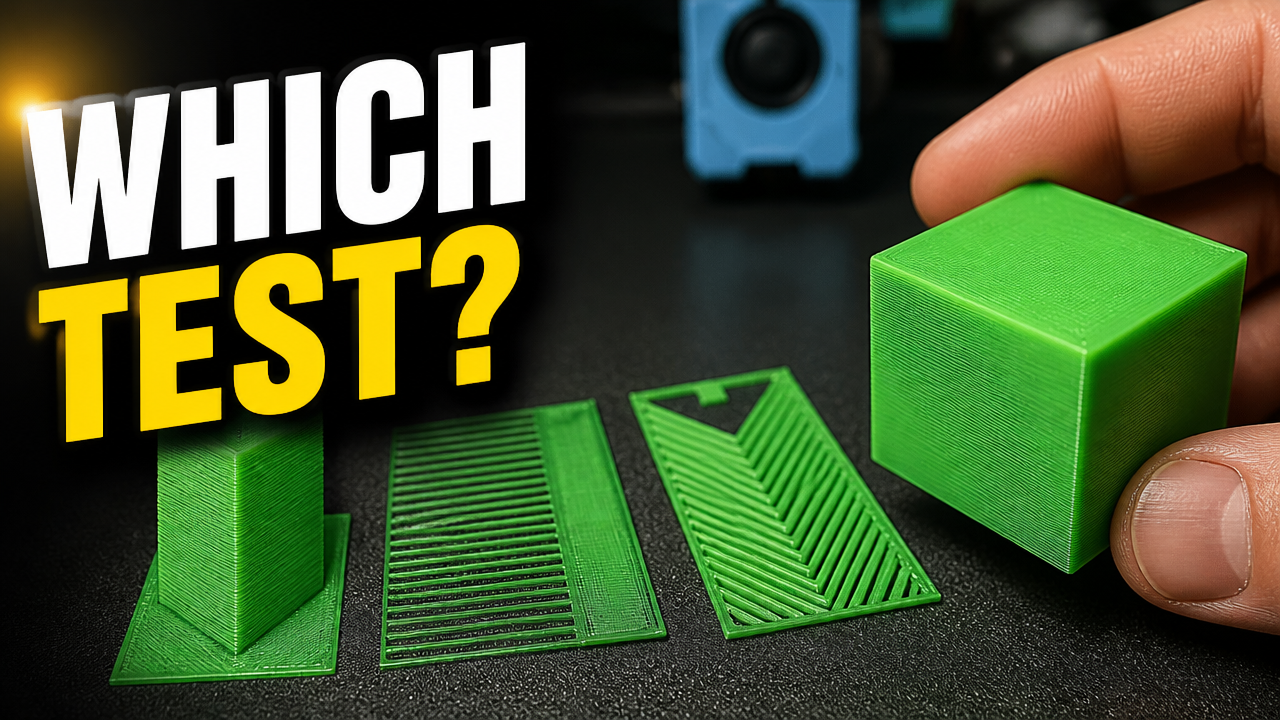
To test your own top surfaces, you can use this Top Surface Ironing Test model.

2. Structured Fuzzy Skin (Voronoi, Perlin, Billow)

Section titled “2. Structured Fuzzy Skin (Voronoi, Perlin, Billow)”

Older versions of fuzzy skin simply jittered the nozzle randomly. It often looked like a printing error or wet filament rather than an intentional design choice. OrcaSlicer 2.3.2 introduces mathematically generated noise patterns to turn standard plastic into premium textures.

  • Voronoi Noise: Creates an aggressive, geometric, “leather-like” cracking effect. Perfect for automotive parts or tactical grips.
  • Perlin Noise: Generates a smooth, continuous, flowing texture suitable for organic shapes.
  • Billow Noise: Produces a clustered, “cloud-like” texture.

Klipper Configuration for Surface Finishes

Section titled “Klipper Configuration for Surface Finishes”

When ironing top layers, the extruder is pushing a microscopic amount of filament (typically around 10% flow). To prevent blobs or uneven pressure during these micro-movements, ensure your Klipper configuration is optimized for precise extrusion and smooth cornering.

# Minimal 3DP Surface Finish Baseline (printer.cfg)
[printer]
# Tuning square_corner_velocity prevents the toolhead from dwelling
# and leaving blobs at the edges during ironing passes
square_corner_velocity: 5.0
[extruder]
# Ensure your pressure advance is perfectly tuned for your specific filament
# to handle the rapid start/stops of Structured Fuzzy Skin
pressure_advance: 0.04
pressure_advance_smooth_time: 0.040

3. The True Value of Premium Parts (FDM Cost Calculator)

Section titled “3. The True Value of Premium Parts (FDM Cost Calculator)”

Now that your prints feature professional surface finishes, you can confidently sell them to commercial clients. But to run a profitable farm, you must know your exact margins.

I built the Minimal 3DP FDM Cost Calculator to help you factor in machine wear, transaction fees, and exact material usage.

📉 Check the True Cost of Your Prints Here

Join the Operator Tier on Patreon ($5/mo) to unlock the “Pro” features. This allows you to save your local electricity rates and exact filament spool costs directly to a cloud profile so you never have to type them in again.


OrcaSlicer 2.3.2 is officially stable, and it’s the biggest leap in both engineering utility and aesthetic control we’ve seen this year. Make sure you back up your configurations before upgrading to the final release!

Thanks for joining me on this deep dive series. Stay minimal.

Your support helps me continue developing technical tools and guides for the maker community.

Software Links

Dialing in Multi-Material & Smoother Infill | OrcaSlicer 2.3.2 (Part 3)

Hey, this is Mike from Minimal 3DP. Today we are taking a closer look at OrcaSlicer 2.3.2 with three focus areas: multiline infill, spiral Z-hop, and bulletproof wipe towers.

In older slicer builds, multi-material printing can look incredible until a prime tower collapses halfway through, taking hours of print time down with it. Even with aggressive tuning, wipe towers are still fragile when you mix materials like PETG and PLA.

The latest OrcaSlicer 2.3.2 release candidates include several software-level changes designed to reduce those failures. Let us break down what matters and what to enable.

Watch on YouTube: https://youtu.be/4Pr5vlJvTvk


The Hardware Bridge: Multi-Material Testing

Section titled “The Hardware Bridge: Multi-Material Testing”

Software tweaks only work if your hardware can keep up. For this test set, we are printing K2 Plus parts for an upcoming video and using that platform as the baseline for all 2.3.2 multi-material checks.

Transparency Note: Some links in this post are affiliate links. If you use them to make a purchase, I may earn a small commission that supports M3DP. You do not pay extra.


In previous versions, multiline infill patterns like Triangles or Cubic created harsh line intersections. As the nozzle crossed previously laid paths, you would hear micro-vibrations and grinding. Over time, those repeated impacts can weaken internal structure quality.

In OrcaSlicer 2.3.2 preview mode, those transitions are rebuilt with rounded corners. Rounded path transitions keep volumetric flow more consistent and reduce abrupt extruder start-stop behavior at intersections.

The practical result is less filament grinding and smoother internal motion, especially useful with softer materials like PLA+ and PETG.

2. Bulletproof Wipe Towers (PETG/PLA Interfaces)

Section titled “2. Bulletproof Wipe Towers (PETG/PLA Interfaces)”

PETG support interfaces for PLA are popular because the materials separate cleanly. The downside is that they also struggle to bond on the prime tower, which can lead to tower delamination and mid-print failure.

OrcaSlicer 2.3.2 adds interface-specific controls to improve tower survivability:

  • Interface temperature boosts: Temperature is raised on key interface layers to improve PETG/PLA tower adhesion.
  • Extra pre-extrusion: Nozzle pressure is built before tower engagement to reduce under-extrusion on critical early layers.
  • Flushing notches: The nozzle is wiped before flushing to reduce blob dragging across the part.

These new wipe tower controls can save long prints, but there is still a cost problem: prime towers consume a lot of filament.

To quantify that waste, use the Minimal 3DP FDM Cost Calculator:

Calculate Your True Print Costs

If you are tired of typing filament and machine costs into every run, the Operator tier on Patreon unlocks Pro calculator features with saved profile data:

Join the Operator Tier on Patreon ($5/mo)

This lets you store local energy rates and machine data so you can evaluate multi-color jobs quickly before you commit print time and material.


4. Spiral Z-Hop Optimization & Klipper Config

Section titled “4. Spiral Z-Hop Optimization & Klipper Config”

Standard Z-hop can force abrupt Z-axis movement. On lower-end controller boards, large amounts of micro-movement can overload the planner buffer and cause stutters or blobs.

Spiral Z-Hop in OrcaSlicer 2.3.2 introduces adaptive slicing resolution (roughly 4 to 24 segments), producing smoother motion commands that are easier for controllers to process.

If you run mainline Klipper, validate your retraction and Z-axis limits so the machine can execute rapid hop transitions reliably:

# Minimal 3DP Z-Hop & Retraction Baseline (printer.cfg)
[firmware_retraction]
retract_length: 0.8
retract_speed: 40
unretract_extra_length: 0.0
unretract_speed: 40
[stepper_z]
# Ensure max_z_velocity and max_z_accel can support rapid spiral hops
max_z_velocity: 15
max_z_accel: 100

OrcaSlicer 2.3.2 makes meaningful progress on three real production issues:

  • Cleaner multiline infill transitions
  • More reliable PETG/PLA wipe tower behavior
  • Smoother Z-hop motion delivery for constrained controllers

These are practical quality-of-life improvements, but they do not remove the economics of multi-material waste. Pair the new slicer controls with cost tracking so your print decisions stay both reliable and profitable.

Fixing Wavy Walls & Sagging Bridges: OrcaSlicer 2.3.2 Flow Tuning

Even after extensive tuning, such as running resonance compensation, 3D printed parts can still exhibit visual artifacts. Common issues include sagging bridges and “wavy” or “bulging” outer wall textures, which persist despite standard calibration efforts. OrcaSlicer 2.3.2 (Release Candidate) introduces highly granular software adjustments to address these specific hardware-extrusion bottlenecks.

This technical guide documents the process of utilizing structure-specific flow ratios and high-density bridging to achieve injection-molded surface qualities.


The Hardware Bridge: Extrusion Consistency

Section titled “The Hardware Bridge: Extrusion Consistency”

Software flow tuning is only effective if your hardware maintains consistent volumetric pressure. For these tests, we rely on the Creality K2 Plus to ensure baseline stability, utilizing eSUN PLA+ to accurately gauge the effect of flow modifications.

Affiliate Notice: Purchasing through these links supports the Minimal 3DP ecosystem at no additional cost to you.


Granular Flow Control: Eliminating the Ripple Effect

Section titled “Granular Flow Control: Eliminating the Ripple Effect”

Previous slicer iterations relied heavily on a global flow rate multiplier. OrcaSlicer 2.3.2 allows users to independently adjust the flow ratio for almost every distinct print structure (outer walls, inner walls, first layer, etc.).

When utilizing a uniform flow rate, the volume required for optimal layer adhesion on inner walls or infill often causes slight over-extrusion on the outer perimeters, resulting in a visible “ripple effect” or wavy interface on thin walls.

By navigating to the Quality tab and checking the “Set other flow ratios” box in the Walls and Surfaces section, we can decouple these values.

  1. Establish Baseline: Determine your optimal global flow rate. In our K2 Plus testing, the baseline flow was 0.98, whereas OrcaSlicer defaults to 1.0.
  2. Isolate Outer Walls: Decrease the flow rate strictly for the “Outer Wall” parameter.
  3. Result: Lowering the flow rate specifically on the outer perimeter eliminates the wavy texture, resulting in a visually smoother face and sharper corners without compromising the structural integrity of the infill.

High-Density Bridging: Structural Overhauls

Section titled “High-Density Bridging: Structural Overhauls”

Bridging unsupported geometry traditionally involves stretching filament across a gap. OrcaSlicer 2.3.2 introduces a setting designed to increase the density of the bridging surface, placing the extruded lines closer together to form a solid sheet.

Using the Unsupported Bridge Experiments Model, we observed the following:

  • Untuned Bridging: Lines are spaced far apart, lacking adhesion, resulting in gaps and severe sagging.
  • High-Density Enabled (Flow = 1.0): The top surface solidifies significantly, but requires further flow tuning.
  • High-Density + Altered Flow: The release notes advise using a lower flow rate paired with higher density. Testing with an erroneously high flow rate produced poor top surfaces. The ideal configuration requires matching the high density (closer lines) with a proportional drop in bridging flow to prevent material pooling.

When pushing high-density bridging and rapid flow transitions on high-speed machines, your Klipper extruder settings must be configured to handle sudden spikes in max_extrude_cross_section, especially if overlapping perimeters occur.

# Minimal 3DP Extruder Baseline (printer.cfg)
[extruder]
# Ensure this value accommodates high-density bridging calculations
max_extrude_cross_section: 5.0
# Ensure your pressure advance is tuned for the specific filament
# to prevent bulging during the rapid decelerations of bridging
pressure_advance: 0.04
pressure_advance_smooth_time: 0.040

OrcaSlicer v2.3.2 Beta 2: The Data-Driven Slicer Overhaul

The community has been waiting for a major update to the OrcaSlicer interface, and v2.3.2 Beta 2 delivers. This release isn’t just about small bug fixes; it represents a fundamental shift toward real-time monitoring and granular control—perfect for those of us who view our 3D printers as precision engineering tools.

In this deep dive, we’re exploring how these new UI changes and technical features can revolutionize your workflow.

[!WARNING]

Before you dive into the new features, remember that this is beta software. To avoid the “Foundation of Sand” issue where your profiles are lost during an update, back up your configuration folder immediately.

Pro Tip: In OrcaSlicer, go to Help > Show Configuration Folder. Zip that entire directory and save it to a safe location.

1. The Improved G-Code Viewer: Real-Time Flow Analysis

Section titled “1. The Improved G-Code Viewer: Real-Time Flow Analysis”

One of the most significant updates in v2.3.2 is the integration of an improved G-code viewer, ported directly from PrusaSlicer.

For the “Engineering Enthusiast,” this is a game-changer. You can now analyze your prints in real-time with specific views for:

  • Actual Speeds: Visualize exactly how fast your toolhead is moving at every point of the model.
  • Volumetric Flow Rates: Identify potential bottlenecks before you even start the print.

2. Fine-Tuning with “Set Other Flow Ratios”

Section titled “2. Fine-Tuning with “Set Other Flow Ratios””

OrcaSlicer now allows you to set individual flow ratios for nearly every feature of your model. This is critical for achieving “Gold Standard” quality.

If your base flow is even slightly off, your entire print can fail. By isolating flow ratios for different parts of the model, you gain the granular control needed for high-performance engineering prints.

3. Modular Printer Agents: Multi-Material Sync

Section titled “3. Modular Printer Agents: Multi-Material Sync”

The new Modular Printer Agent Architecture allows for seamless synchronization with multi-filament units like the AMS (Quitty, Snapmaker, Armor Turtle box). This architecture ensures your slicer and your hardware are always in sync, reducing the friction often found in multi-material workflows.

  • Compact Printer Interface: The new UI lists your printer, nozzle diameter, and bed type in a more informative, streamlined layout.
  • Wi-Fi Connectivity: Management has moved to a more visually pleasing location above the printer settings.
  • New Profiles: Dozens of new printer and filament profiles have been added, ensuring your hardware is supported out of the box.

In the next part of this series, we’ll be doing a technical deep dive into bridging and further testing these new flow rates.

Watch the full video walkthrough here: https://youtu.be/16ZUGGPG-pI


Your support helps me continue developing technical tools and guides for the maker community.

Transparency Note: Some of the links in this post are affiliate links. If you go through them to make a purchase, I will earn a small commission (which helps support M3DP!). You will not pay a penny more.